
Supporting the Timely Detection of Congenital Heart Defects
A resource for New Mexico healthcare professionals
Watch Their Hearts is an initiative of Hole in the Heart created to help families and professionals recognize potential signs of congenital heart defects (CHDs) and support the timely detection and evaluation of heart conditions that may not be identified before or immediately after birth.
Table of Contents
- What Are Congenital Heart Defects?
- Newborn Screening Is an Important Tool, But It May Not Identify Every CHD
- The Six (6) Warning Signs
- Look for Patterns, Not Just Individual Patterns
- Childhood Chronic Illness & Mental Health
- Childhood Chronic Illness & the Impact on the Family
- Offer Watch Their Hearts as Expecting and Newborn Detection
- A Simple Message for Families
- Have questions? We’re Here to Help
- Medical Resources for Each Section
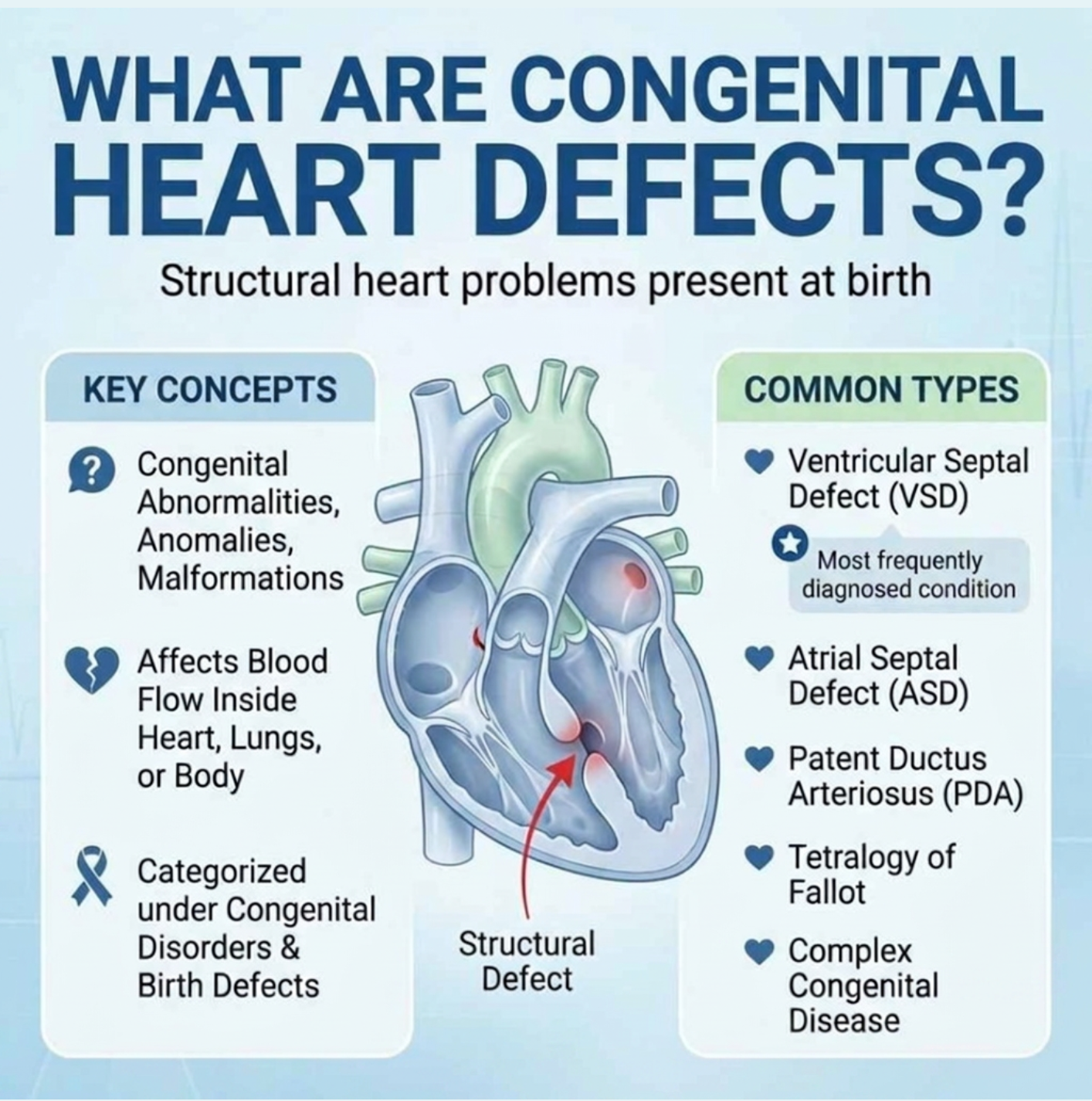
A congenital heart defect (CHD) is a structural problem with the heart that is present at birth. CHDs can affect how blood flows through the heart and to the rest of the body.
CHDs are the most common birth defect; they occur in approximately 1 in 100 births and exist across a spectrum—from conditions that may require monitoring and follow-up to critical defects that require immediate care.
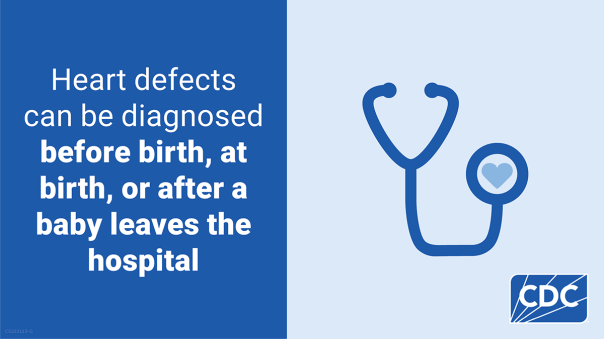
Some CHDs are identified during pregnancy or through newborn screening. Others may go undetected until after a newborn goes home.
Newborn Screening Is an Important Tool, But It May Not Identify Every CHD
Fetal ultrasounds and Critical Congenital Heart Defect (CCHD) newborn screening are important tools for identifying heart conditions. However, they do not identify every congenital heart defect.
Some heart defects may not cause noticeable signs immediately after birth. This makes continued observation and family awareness especially important during the newborn and infant period.
Click ARROWS to learn more
Why This Matters in New Mexico
Current New Mexico surveillance data underscores the importance of continued awareness and observation:
- 4.8% of identified birth defects were circulatory-system birth defects.
- 4.1% were identified as heart-related diagnoses within ICD-10 codes Q20–Q24.
- 59.2% of birth defects identified in death-certificate data were circulatory-system defects.
This data highlights the importance of spotting potential warning signs and helping families get timely medical checkups when something feels off.
CHDs Can Look Very Different
Congenital heart defects exist across a broad spectrum.
Some heart defects are mild and may only require monitoring or follow-up. Others are more serious and may require immediate medical care. Some may not be recognized until a newborn or infant is home and showing signs that something isn’t right.
This is why knowing what is normal for that newborn or baby—and recognizing changes—is important.
A family may not describe a concern as a “heart problem.” They may simply say:
- “The baby gets tired while feeding.”
- “Something seems different.”
- “The baby is sleeping all the time.”
- “Breathing seems harder.”
- “The baby isn’t gaining weight.”
- “I just feel like something isn’t right.”
Those observations matter.
The Six (6) Warning Signs
Screening is one important layer of protection. Your clinical observation adds another.
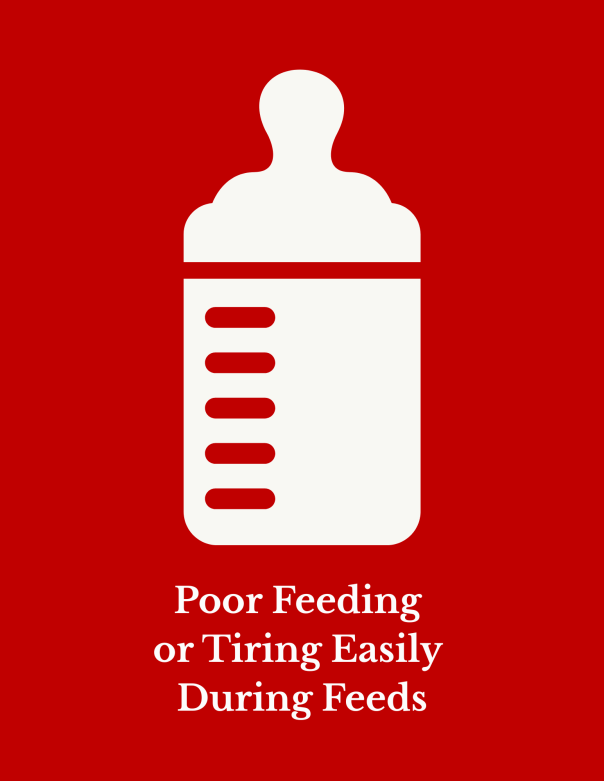
A newborn or baby may have difficulty feeding, tire easily while eating, take an unusually long time to finish a feed, or have difficulty keeping up with feeding.
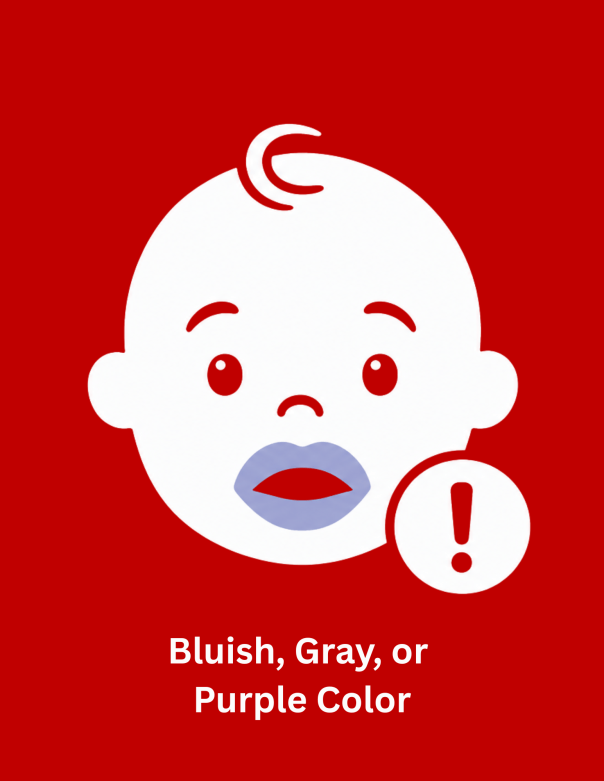
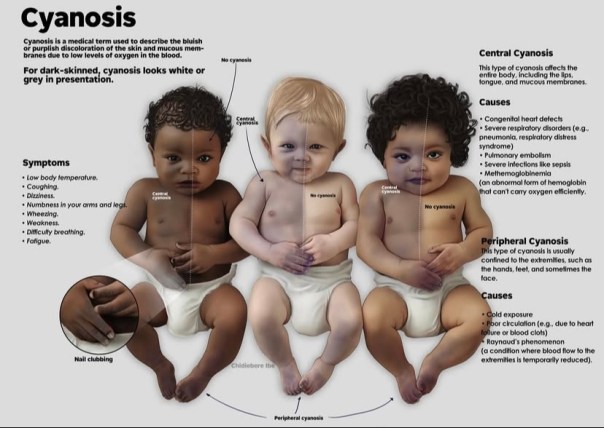
Watch for unusual color changes around the lips, face, tongue, or fingertips.
Remember: Color changes can look different across skin tones. On darker skin, concerning changes may appear gray, purple, or as a noticeable change in the color of the lips, tongue, gums, or nail beds.
See below for the visual chart.
Watch for breathing that is unusually fast, difficult, or requires extra effort.
A newborn or baby who is not gaining weight as expected—or who has ongoing growth concerns—may need further evaluation.
Pay attention to a newborn or baby who is unusually difficult to wake, has very low activity, or demonstrates a significant change from their normal level of alertness.
Excessive sweating during feeding or activity—particularly when combined with tiring, feeding difficulties, or breathing concerns—may warrant evaluation.
In darker skin tones, cyanosis may be easier to see around the nose, mouth, and lips, as well as on the fingernails, hands, and feet. Changes in breathing and other signs of heart or breathing problems are also important to notice. Recognizing these signs early can help support timely care and prevent complications.

Look for Patterns, Not Just Individual Symptoms
One warning sign does not automatically mean a baby has a CHD.
However, persistent concerns, changes from the baby’s normal pattern, or multiple warning signs occurring together deserve attention.
Your connection with families creates an important opportunity to listen to their concerns, build confidence through education and encouragement, and help connect them with the care and resources they need.
Examples of Patterns:
Multiple Warning Signs: When several warning signs are present together, encourage immediate or prompt medical evaluation, depending on the severity of the symptoms.
One Persistent Concern: A concern that continues, worsens, or represents a significant change in the baby’s usual behavior should not be ignored.
Encourage the family to speak to their baby’s healthcare team and seek appropriate evaluation.
Feeding + Sweating
A baby who repeatedly becomes tired or sweaty during feeds should seek further evaluation.
Breathing + Color Change
Breathing difficulty accompanied by bluish, gray, or purple color changes requires pediatric emergency (ER) medical care.
Feeding + Poor Weight Gain
Difficulty feeding along with ongoing concerns about growth should be discussed with the baby’s doctor.
Extreme Sleepiness + Feeding Difficulty
A significant change in alertness along with difficulty feeding should be discussed with the baby’s doctor.
Page 2 Curriculum
- Childhood Chronic Illness & Mental Health
- Childhood Chronic Illness & the Impact on the Family
- Offer Watch Their Hearts as Expecting & Newborn Detection
- A Simple Message for Families
- Quick Reference Questions
- Contact Us for Additional Information & Support
- Medical Resources for Each Section

